Choose a problem type using the buttons above.
Solve each problem by converting the given expresion of the problem in words to a pictorial representation using bars, by dragging the blue dividing and ending lines. Once the correct model has been constructed, the answer may be calculated and entered.
Bar models provide a pictorial view of many important mathematical processes, and so help bridge the gap between concrete and abstract representations of arithmetic. Their particular power arises from the manner in which they may be consistently applied across a very wide variety of problems.
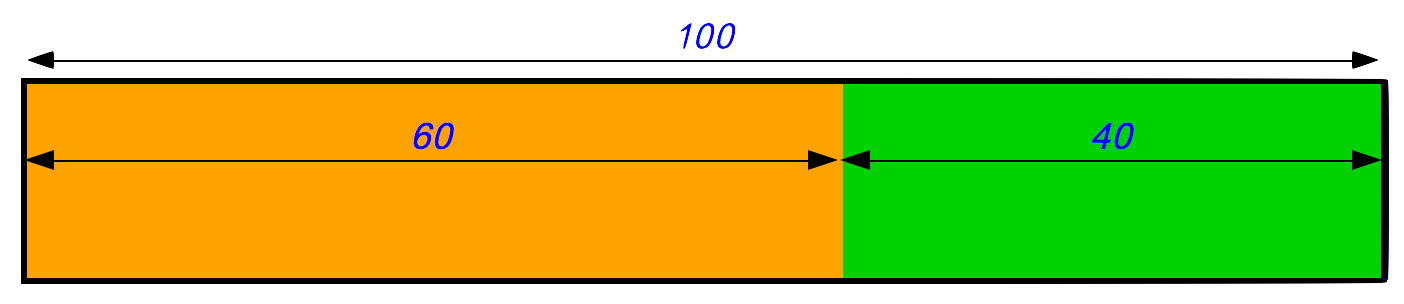
The Part-Whole Model uses a single bar to show how two parts combine to form a whole. This model is suitable for problems that involve finding the sum given two parts, or finding an unknown quantity given a known quantity and the total.
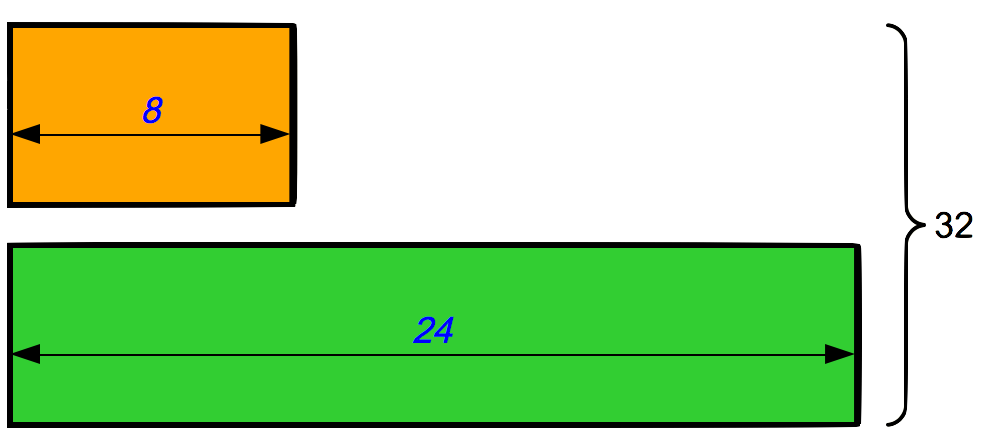
The Comparison Model uses two (or more) bars to show the relationship between quantities. This model is suitable for problems that involve finding the sum or difference of given quantities, or for finding an unknown quantity when given another quantity and either the total or the difference between them.
| Level | Problems | Solved | Skipped |
|---|---|---|---|
| 1 | |||
| 2 | |||
| 3 | |||
| 4 |
These activities involve both Part-Whole and Comparison Bar Models as representations of word problems involving both the sum or difference of quantities. These models aid extracting the information from the problem, representing it pictorially, and visualising the solution process.
The models are also useful for solving problems where the quantities made up of equal parts, and thus also for representing fractions, decimals and percentages.
The development of these bar model activities was inspired by William Emeny's Great Maths Teaching Ideas blog entry Bar modelling—a powerful visual approach for introducing number topics.