Modelling Arithmetic with the Singapore Model Method
Bar models provide a pictorial view of many important mathematical processes, and so help bridge the gap between concrete and abstract representations of arithmetic. Their particular power arises from the manner in which they may be consistently applied across a very wide variety of problems.
The simplest use of Bar Models is modelling problems
involving addition and
subtraction.
However, they are naturally extended to support problems
involving multiplication and
division.
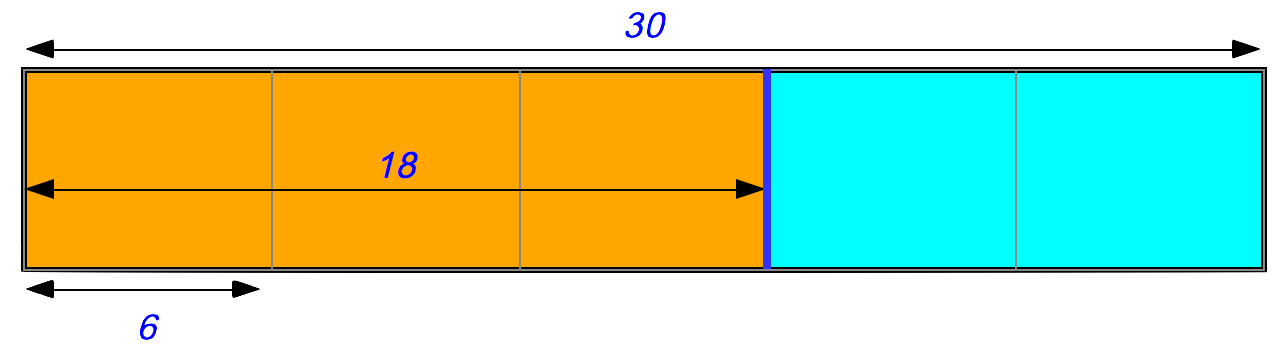
For example, the part-whole model can represent more than two equal parts,
and the bars in the comparison model can similarly represent a one
part vs multiple parts relationship.
The following activity involves both types of bar model, and their application to problems involving both the sum or difference of quantities, and quantities made up of equal parts. Using word problems - extract the information, represent it, solve...